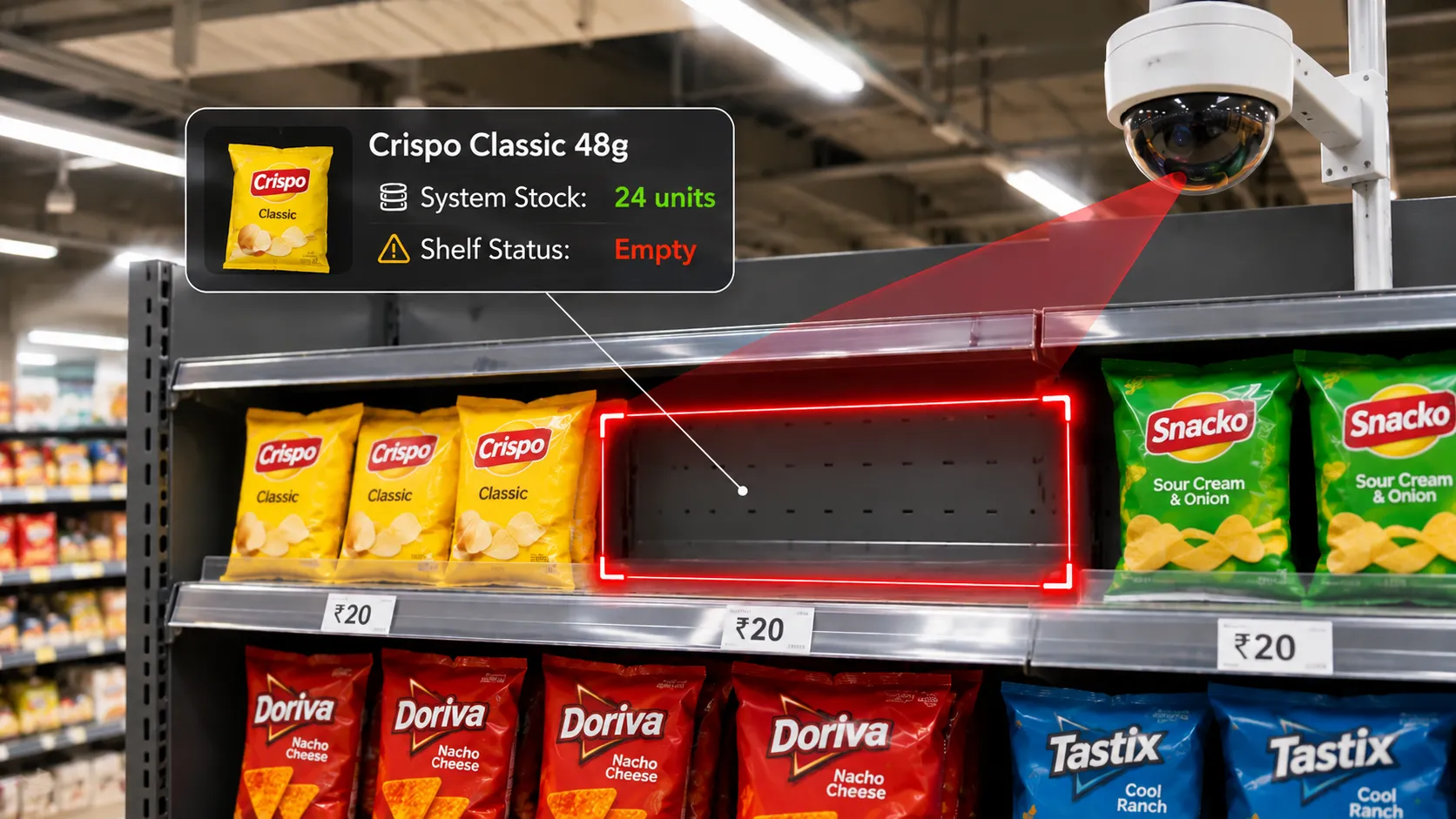
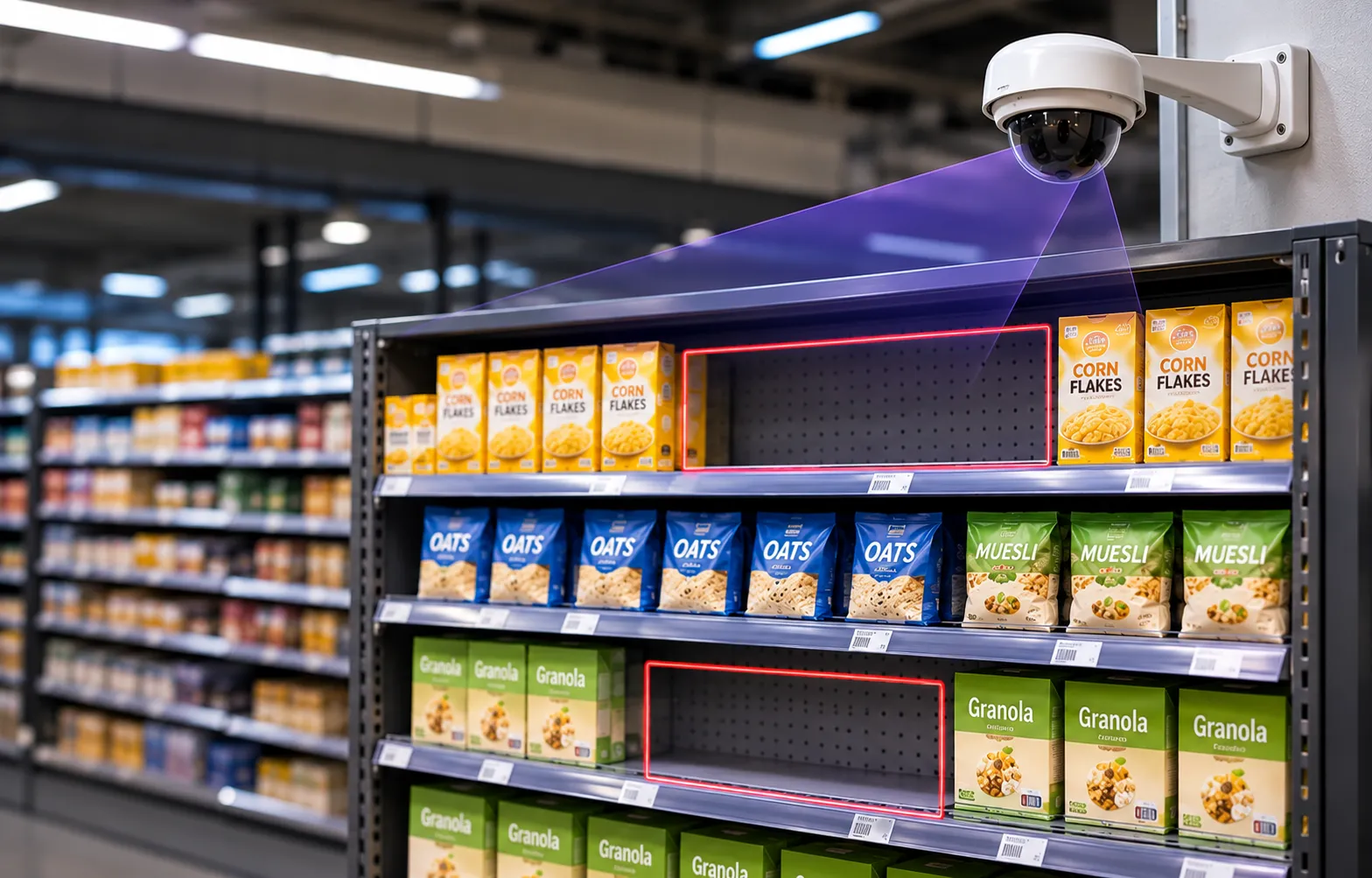
Prevent lost sales with real-time out-of-stock detection.

Turn existing CCTV cameras into practical shelf monitoring. Detect empty shelves and availability gaps early, route actionable alerts to store teams, and reduce manual shelf audits.

Start with the cameras and shelf zones you already have.

Visual shelf signals

Spot gaps where inventory data cannot see them.

Actionable alerts

Give teams context for faster store action.

Existing camera estate

Explore coverage before adding hardware.

AI-powered retail shelf monitoring
BUILT AROUND THE WAY RETAIL TEAMS WORK
✓ Camera-based shelf visibility
✓ Configurable store workflows
✓ Retail & FMCG use cases
Retail shelf monitoring with an out-of-stock product
THE SHELF IS THE MOMENT OF TRUTH

Inventory records don’t always show what shoppers can actually buy.

A product can be available in a back room or system while its shelf position is empty. Kivo Eye adds a visual layer so teams can see shelf conditions and make an informed decision before a shopper walks away.

01

See the physical shelf

Monitor configured shelf zones through your existing video environment instead of relying only on a stock number.

02

Prioritize the right response

Use a clear alert with store and shelf context to decide whether replenishment, investigation, or escalation is needed.

03

Build a repeatable operating rhythm

Make shelf checks more consistent across locations while keeping your team in control of the workflow.

HOW IT WORKS

From camera feed to an operational signal in three clear steps.

Start with the shelf areas that matter most. The first conversation is about coverage, store conditions, and what a useful response looks like for your team.

01

Assess camera coverage

Identify existing cameras and the shelf zones that can give your team a useful point of view.

02

Configure shelf conditions

Define the visual conditions worth monitoring and align alerts with your store operating process.

03

Act on the signal

Give the appropriate team a timely prompt and the context they need to check and replenish the shelf.

BUILT FOR CROSS-FUNCTIONAL RETAIL TEAMS

One shelf signal. Different teams can turn it into better decisions.

Use the same visual insight to support store execution, brand visibility, category standards, and a practical technology rollout.

⌁

Store operations

Help teams focus shelf walks and respond to the areas that need attention first.

◫

FMCG & brand teams

Understand shelf availability where product visibility shapes the shopper experience.

◌

Category teams

Bring a visual layer to discussions about gaps, compliance, and on-shelf execution.

↗

IT & innovation

Explore a computer-vision use case with the camera estate and workflows you already manage.

A MORE COMPLETE SHELF PICTURE

Complement the tools you already use.

Every method can be useful. The key question is whether it shows the physical shelf condition in time for your team to act.

Use this comparison as a conversation starter during an assessment not as a replacement for evaluating your own store environment.

Approach What it can show Typical trade-off Shelf condition visibility
Manual shelf walks A person's direct view during a scheduled check. Can be time-intensive and uneven across busy shifts. Periodic
POS or inventory data Sales, stock signals, and replenishment information. May not confirm what is physically available to a shopper. Indirect
RFID or dedicated sensors Item or fixture-specific signals where deployed. May require new hardware, tagging, or additional integration work. Deployment-dependent
Kivo Eye visual monitoring Configured visual conditions in a shelf zone through camera coverage. Needs a coverage and workflow assessment for each store environment. Direct visual signal
SEE THE FOUNDATION

Computer vision that starts with the cameras already in your store.

See a short introduction to how AI computer vision can add monitoring and analytics to an existing CCTV environment. Then book an assessment specific to your shelves.